



Join our Telegram group and receive breaking and trending news updates directly on your phone.
Join for News Updates ✕


(C) Google.
,,,,Kogi, Benue,Rivers,Lagos Listed.
Dada Ahmed, Editor,The Reporters.
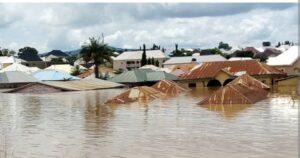
Nigeria may be heading into another challenging rainy season as the Federal Government has identified 226 Local Government Areas (LGAs) across 33 states and the Federal Capital Territory (FCT) as high flood risk zones in 2026, raising fresh concerns over environmental safety and disaster preparedness.
The Minister of Water Resources and Sanitation, Joseph Terlumun Utsev, disclosed this during the presentation of the 2026 Annual Flood Outlook by the Nigeria Hydrological Services Agency at the State Banquet Hall of the Presidential Villa in Abuja.
According to the minister, no fewer than 14,118 communities in 266 LGAs fall within the high-risk category, cutting across a wide stretch of the country, including flood-prone states such as Kogi, Benue, Bayelsa, Rivers and Lagos.
The projection highlights the growing vulnerability of communities to extreme weather patterns, often worsened by poor drainage infrastructure, urban congestion and climate-related changes.
Beyond the high-risk zones, the outlook reveals that 405 LGAs in 35 states fall within the moderate flood risk category, leaving only Ekiti State outside the bracket.
In addition, 923 communities in 77 LGAs across 24 states are expected to experience minimal flooding, indicating that the impact of the rainy season will be felt nationwide at varying degrees.
Experts say the figures underscore the urgent need for a more proactive and coordinated environmental management approach, particularly as flooding continues to threaten food security, displace populations and damage critical infrastructure across Nigeria.
In a bid to mitigate the anticipated impact, the government has introduced a community-based flood forecasting system under the 2026 outlook.
The initiative is designed to provide localized and timely warnings to vulnerable communities, enabling quicker response and better preparedness at the grassroots level.
President Bola Ahmed Tinubu, represented by the Minister of Environment, Balarabe Lawal, reiterated the administration’s commitment to strengthening emergency response systems.
He noted that improved coordination among relevant agencies and enhanced rescue operations remain critical to reducing the devastating impact of floods.
The President further emphasized the importance of effective communication in disaster management, stressing that timely information sharing would play a vital role in safeguarding lives and property.
As Nigeria prepares for the peak of the rainy season, the latest flood outlook serves as both a warning and a call to action for governments at all levels, communities and stakeholders to intensify efforts toward resilience, planning and sustainable environmental practices.
—From correspondent in Abuja.