




Join our Telegram group and receive breaking and trending news updates directly on your phone.
Join for News Updates ✕


By Dada Ahmed.
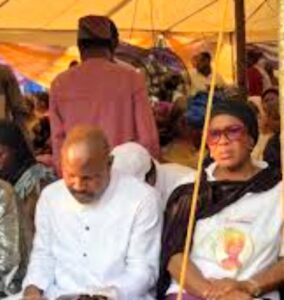
Nollywood actor Saidu Balogun and his ex-wife.
(C) Facebook.
In a society where broken marriages often descend into bitterness, public quarrels, and lifelong hostility, the recent appearance of veteran Nollywood actor Saidu Balogun at the burial ceremony of the mother of his former wife, Fathia Balogun, another accomplished Hollywood actress,has stirred thoughtful conversations across Nigeria. For many observers, the gesture was not just a social appearance; it was a powerful reminder that separation does not have to mean permanent enmity.
Years ago, the once-admired marriage between Saidu and Fathia Balogun reportedly came to an end after the actor sought a formal separation through the court in 2014.
Their union, which produced two children, had once been celebrated by fans of the Nigerian film industry.
Like many marriages, however, it eventually faced challenges that made parting ways inevitable.
Yet what many people found remarkable was not the breakup itself but the maturity displayed years later.
Saidi Balogun’s presence at the burial ceremony of his former mother-in-law signaled respect, empathy, and recognition of shared history. It showed that even when romantic relationships end, humanity and mutual regard do not have to disappear.
In many parts of the world, divorce or separation often turns former partners into adversaries. Communication breaks down, children become emotional casualties, and extended families are forced to take sides.
The hostility sometimes lasts for decades, leaving emotional scars that affect not only the couple but also the children and wider community.
The conduct of Saidu and Fathia Balogun offers a refreshing alternative. Their ability to maintain civility demonstrates that maturity can prevail over bitterness. By standing together during a moment of family grief, they sent a quiet but powerful message that respect should not end simply because a marriage does.
For former couples, the lesson is simple but profound.
Separation may close one chapter of life, but it does not erase shared memories, family ties, or the responsibilities that come with raising children.
When ex-partners choose peace over hostility, they create a healthier environment for everyone connected to them.
Children, in particular, benefit greatly from such maturity. When parents remain respectful after a separation, children feel more secure and less pressured to choose sides. They grow up seeing cooperation instead of conflict, which can shape how they approach relationships in their own lives.
Ex-husbands, especially, can draw an important lesson from Saidu Balogun’s gesture.
Society often expects men to completely detach emotionally after a separation. But true strength sometimes lies in showing kindness, acknowledging past bonds, and maintaining dignity in interactions with a former partner and her family.
Respecting one’s former spouse does not diminish a man’s pride; rather, it reflects emotional intelligence and maturity. A man who treats his ex-wife with dignity demonstrates character, responsibility, and leadership,qualities that command admiration in any society.
Equally important is the role of ex-wives in sustaining such harmony. Fathia Balogun’s openness to her former husband’s presence at the burial ceremony also reflects grace and understanding. It shows that reconciliation of hearts, even without reconciliation of marriage, is possible.
The broader lesson extends beyond marriage. When individuals handle personal disagreements with maturity, they contribute to peace in the larger society.
Every act of forgiveness, tolerance, and respect helps reduce the culture of hostility that often defines human interactions.
Nigeria, like many countries, faces social tensions in different forms,political, ethnic, and religious. Stories of individuals choosing peace over conflict therefore carry symbolic value. They remind us that unity begins with how people treat one another in their everyday lives.
What Saidu and Fathia Balogun demonstrated is not merely celebrity courtesy. It is a model of emotional discipline. It shows that even when love fades or relationships change, the principles of kindness and respect should remain intact.
For couples who have separated or are going through difficult marital transitions, their story offers hope. It suggests that healing is possible and that the end of a marriage does not have to become the beginning of lifelong After, experience shows that ultimately, humanity thrives when people rise above resentment.
The quiet dignity displayed by Saidu and Fathia Balogun serves as a reminder that peace is not only negotiated in international diplomacy; it is also built in families, friendships, and even in relationships that have come to an end.
Ahmed,a journalist, publishes The Reporters.