



Join our Telegram group and receive breaking and trending news updates directly on your phone.
Join for News Updates ✕


By Dada Ahmed in Lokoja.
(C) Google/Vanguard.
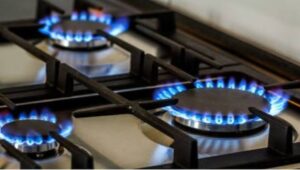
Residents of Lokoja, the Kogi State capital, experienced relief on Thursday as the price of Liquefied Petroleum Gas (LPG), commonly known as cooking gas, declined across several retail outlets in the city.
Checks at some gas stations showed that the per-kilogram price of cooking gas, which previously sold for about ₦1,200 and above, had dropped to around ₦1,000. The reduction brought smiles to the faces of many consumers who turned up to refill their cylinders, easing the financial pressure on households already grappling with rising living costs.
The price adjustment is seen as a positive development in the domestic energy market, offering temporary respite for residents who rely heavily on cooking gas as a cleaner and more efficient energy source compared to firewood and kerosene. Observers note that fluctuations in LPG prices are often influenced by supply conditions, transportation costs and broader economic factors affecting the energy sector.
Many residents expressed hope that the downward trend would be sustained, as stable and affordable cooking gas prices are critical to household welfare and the promotion of cleaner energy use in urban centres like Lokoja.
In a related development, one of the filling stations in the area, name withheld, has reduced the pump price of petrol from about ₦940 to ₦739 per litre.
Our correspondent reports that despite the price reduction, transport fares have yet to come down, as commercial drivers continue to charge higher rates. The drivers attribute this to the rising cost of spare parts and the fact that many acquired their vehicles, motorcycles and tricycles at higher prices, often through hire-purchase arrangements that are proving costly to service.
“How do you expect me to cope in a situation where a keke I am supposed to buy for ₦4 million was eventually valued at ₦7 million because I could not pay cash, under a hire-purchase arrangement?” Mohammed Abubakar, a keke operator asked
“I am expected to repay the debt within one to one and a half years and still make a profit,” he added.
He said that despite these financial pressures, passengers continue to demand reduced fares, a situation he described as unrealistic under the prevailing economic conditions.