




Join our Telegram group and receive breaking and trending news updates directly on your phone.
Join for News Updates ✕


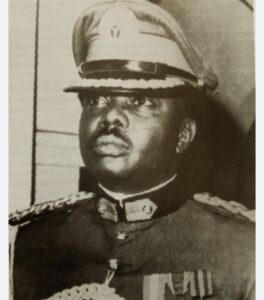
(C) Wikipedia
General Murtala Ramat Mohammed: The Meteor Who Blazed Across Nigeria’s Sky in 201 Days
By Dada Ahmed.
On Friday,February 13, 1976, 50 years ago,Nigeria stood still.
Gunshots pierced the calm of a Lagos morning as a violent coup attempt cut short the life of the nation’s dynamic Head of State, General Murtala Ramat Mohammed, LT.Akintunde Akinsehinwa, his Aide-de-Camp (ADC) and his driver, Sgt. Adamu Michika. He had ruled for only 201 days, but in that brief span, he altered the course of Nigeria’s history.
Mohammed,aged 37,came to power on July 29, 1975, following a bloodless coup that ousted General Yakubu Gowon. From his first broadcast to the nation, it was clear that a different leader had emerged, bold, decisive and impatient with complacency.
He launched an aggressive purge of the civil service, retiring thousands of officials accused of inefficiency or corruption.
While controversial, the move sent a strong message that indiscipline would no longer be tolerated. Ministries were restructured, public institutions shaken out of inertia, and a renewed sense of urgency swept through government.
Perhaps most significantly, Mohammed set Nigeria firmly on the path to civilian rule. He announced a clear transition timetable, culminating in a handover to an elected government in 1979,a promise later fulfilled by his successor, General Olusegun Obasanjo.
His administration also initiated the process of relocating Nigeria’s capital from Lagos to Abuja, citing national unity and central accessibility. In foreign policy, he took a fearless stance, openly supporting liberation movements in southern Africa and asserting Nigeria’s leadership role on the continent.
But his momentum was violently halted.
On that fateful February morning in 1976, a group of dissident soldiers led by LT Col.Buka Suka Dimka ambushed Mohammed’s convoy in Lagos.
The Head of State was assassinated in his official car.
The coup attempt ultimately failed, and Dimka and his collaborators were later captured,faced
Military trial, found guilty and executed, but the nation had already lost one of its most electrifying leaders.
The shock was profound. markets closed. radios crackled with tense announcements. Citizens mourned openly. In death, Mohammed became a symbol of decisive leadership and patriotic zeal.
Though his tenure lasted barely seven months, his impact was enduring. His reforms reshaped governance, his transition plan restored hope for democracy, and his assertive diplomacy elevated Nigeria’s voice in Africa.
General Murtala Ramat Mohammed did not govern long , but he governed with fire.
In just 201 days, he became a legend.