




Join our Telegram group and receive breaking and trending news updates directly on your phone.
Join for News Updates ✕


By Abdulkarim Abdulmalik.
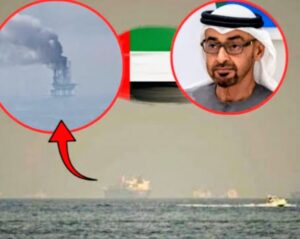
For more than ten years, the United Arab Emirates carefully crafted a global identity that went far beyond crude oil and skyscrapers. It sold itself as rarer entity in a volatile region: Predictability. Stability. Safety.
Dubai, in particular, became a symbol of that promise; a place where billionaires parked their wealth, startups tested bold ideas, and global tech firms built the infrastructure of tomorrow. From artificial intelligence to fintech, the UAE was not just participating in the digital economy; it was attempting to lead it.
Paradoxically, in flash of few weeks in 2026, that carefully constructed narrative began to unravel.
A Dream Built on Stability
The UAE’s ambitions were not modest. Backed by vast sovereign wealth and strategic partnerships, it positioned itself as a rising hub in the global race for artificial intelligence. Companies like G42 were central to this vision—tasked with turning the country into what policymakers often described as a “third pole” in AI, alongside the United States and China.
This ambition depended on one fragile assumption: that the UAE would remain insulated from the region’s conflicts.
It was a calculated bet.
For years, it worked. Investors trusted Dubai not just because it was profitable, but because it felt distant from geopolitical risk; even when tensions simmered across the Gulf.
That illusion did not survive the escalation of conflict involving Iran, the United States, and Israel.
When Infrastructure Became a Target.
On March 1, 2026, the war took a decisive turn. Iranian drone strikes reportedly targeted multiple cloud infrastructure facilities in the Gulf, including data centers linked to Amazon Web Services in the UAE and Bahrain.
One facility in the UAE caught fire.
The damage went far beyond the physical structure. Within hours, banking systems slowed, ride-hailing apps went offline, and parts of the region experienced disruptions that exposed how deeply daily life depended on invisible digital infrastructure.
For a country that had marketed itself as a seamless, hyper-connected society, the shock was profound.
The attack evident of something more unsettling: in modern warfare, data centers are no longer neutral. They are strategic assets; and therefore legitimate targets.
The Expansion of Threat
The situation escalated further on April 3, when Iran’s Islamic Revolutionary Guard Corps issued warnings that it could target the technological infrastructure of American-linked companies across the region.
This was not just rhetoric. It reframed the entire Gulf tech ecosystem as part of a broader battlefield.
Suddenly, the UAE’s role as a host for global tech giants became a liability. The same partnerships that once attracted investment now increased exposure to retaliation.
For multinational firms, the calculation changed overnight: efficiency and tax advantages no longer outweighed security risks.
Investors Exodus.
The psychological impact was immediate.
Within two weeks of the attacks, tens of thousands of expatriates and tourists reportedly left Dubai. Flights filled up. Hotels emptied. The rhythm of a city known for constant motion slowed to an uneasy pause.
Major financial institutions—including Goldman Sachs, Standard Chartered, and Citigroup—began relocating staff from their Dubai offices.
For years, these institutions had used the UAE as a regional headquarters. Their departure, even if temporary, sent a powerful signal: confidence was eroding.
Some international media organizations went further, describing Dubai as a shadow of its former self. A place where uncertainty replaced the glamour that once defined it.
Collapse of a Narrative.
The UAE’s economic model has always relied heavily on perception. It is not just about infrastructure, but about trust.
Trust that contracts will be honored.
Trust that capital will remain safe.
Trust that life and business could continue uninterrupted.
The events of 2026 struck at the heart of that trust.
When data centers burn and financial systems falter, the promise of a “safe haven” became difficult to sustain.
Investors begin to ask uncomfortable questions:
If digital infrastructure could be targeted, what is truly secure?
If geopolitical tensions can spill over so quickly, how insulated is the UAE really?
These are not questions easily answered with policy statements or public relations campaigns.
A New Reality for Digital Economies.
What happened in the UAE reflects a broader shift in global risk.
In the past, wars disrupted oil supplies, shipping lanes, and physical infrastructure.
Today, they also target servers, cloud systems, and digital networks—the backbone of modern economies.
The UAE’s experience demonstrates how deeply intertwined technology and geopolitics have become. A nation can build world-class digital systems, but if those systems are embedded in global conflicts, they inherit those vulnerabilities.
Can the UAE Recover?
Despite the scale of the shock, it would be premature to declare the UAE’s digital ambitions finished. The country still possesses significant advantages:
Vast financial reserves
Advanced infrastructure
Strategic geographic location
A track record of rapid adaptation
However, recovery will likely require a fundamental shift in strategy.
The UAE may need to rethink how it balances global partnerships with geopolitical neutrality. It may also invest more heavily in resilience: redundant systems, decentralized infrastructure, and stronger cybersecurity frameworks.
Most importantly, it will need to rebuild confidence. And that is often the hardest task of all.
*From Safe Haven to Frontline*
The events of 2026 mark a turning point not just for the UAE, but for how we understand economic security in a digital age.
The same networks that power innovation can also become pathways for disruption. The same openness that attracts investment can expose vulnerabilities.
For the UAE, the transformation has been stark.
A nation that once stood as a symbol of stability now finds itself confronting the realities of a world where even the most advanced economies are not beyond the reach of conflict.
And in that new reality, the question is no longer whether digital economies could be built in volatile regions but whether they could be protected once the storms arrive.