




Join our Telegram group and receive breaking and trending news updates directly on your phone.
Join for News Updates ✕


By Dada Ahmed, Lokoja.
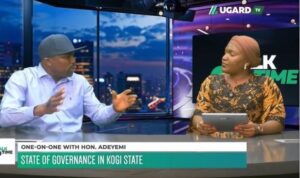
Lugard TV studio.
(C) Google.
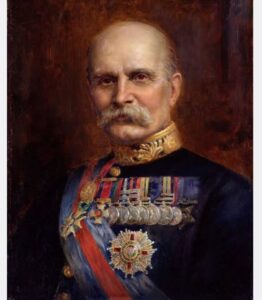
Lord Lugard, Nigeria’s Governor General during colonial era.
(C) Britannica.
When the Kogi State Government unveiled Lugard TV in 2024, it did more than just add another broadcast channel to Nigeria’s media landscape. It resurrected the echoes of history, linking the digital future of public service broadcasting with the deep colonial past of Lokoja,the riverside town where Nigeria’s modern story began.
Operating from the Government House Media Centre in Lokoja, Lugard TV is named after Lord Frederick Lugard, the British colonial administrator who engineered the 1914 amalgamation of the Northern and Southern Protectorates. Many intellectuals are, however ,divided as to whether Lord Lugard’s setting the course actually contributed to uniting Nigeria or otherwise.
The core mandate of this feature is to dwell on the rationale behind the establishment of the TV.
Governor Ahmed Usman Ododo’s administration conceived the channel as a bridge between government and citizens, a platform to tell Kogi’s stories with authenticity, transparency, and professionalism, while also projecting the state’s development agenda to the world.
It is also an ample opportunity to showcase the relationship between the formation of the TV and the evolution of colonial administration in Nigeria.
Equipped with cutting-edge studios, skilled professionals, and a vision to blend governance with compelling storytelling, the TV has quickly gained recognition for innovation and quality programming. But its symbolism goes far deeper than cameras and microphones, it is a nod to Lokoja’s place in the blueprint of Nigeria’s formation being a place where colonial Nigeria was drafted.
Before Lagos boomed into a commercial giant and Abuja rose from the savannah as a purpose-built capital, Lokoja quietly served as the seat of British power in Northern Nigeria, a strategic choice dictated by geography and politics.
Perched where the Niger and Benue rivers meet, Lokoja was for centuries a meeting point of Nupe, Igala, Egbira, Hausa, Yoruba, and other ethnic groups. Traders ferried kola nuts, salt, ivory, and palm oil along the waterways, making the town a vibrant commercial hub long before Europeans arrived.
Both written records and oral historical accounts give clear evidence dynamism and otherwise about how active, changing, and impactful the colonial administration in Nigeria was.
When British explorers reached the then Nigerian area, in the mid-19th century, they quickly recognized its value. In 1857, Dr. William Balfour Baikie, a Scottish explorer and physician, established a British base in Lokoja under the sponsorship of the precursors to the Royal Niger Company. Lokoja then became a mission station, an anti-slavery outpost, and a trading hub where European goods flowed inland and African commodities sailed out to the coast.
By 1900, the British Crown had assumed control from the Royal Niger Company and declared the Protectorate of Northern Nigeria. Sir Frederick Lugard,appointed as the first High Commissioner, chose Lokoja as his headquarters.
From Lokoja, he launched military expeditions, negotiated treaties with northern emirates, and crafted the administrative structures that would later shape Nigeria’s colonial governance.
Lokoja’s tenure as colonial headquarters was, however,short-lived. In 1902, Lugard moved the seat of government to Zungeru, and later to Kaduna in 1916. Yet by the time he orchestrated the 1914 amalgamation, fusing the North, South, and Lagos Colony into a single entity, Lokoja had already etched its place in Nigeria’s political history.
Today, remnants of that era still stand in Lokoja: The colonial relics include the Iron of Liberty , a symbolic tree where freed slaves rested after liberation by British naval patrols,Holy Trinity School,the first primary school in Northern Nigeria, founded in 1860.
Others are;Mount Patti, offering panoramic views of the Niger and Benue’s confluence, a vantage point from which Lugard himself surveyed the land and Colonial Residences and Cemeteries,silent witnesses to an era of empire and resistance.
By naming its newest broadcaster as Lugard TV, Kogi State is deliberately tying its modern voice to a historical narrative. While Lugard’s legacy remains controversial, praised by some for administrative foresight, criticized by others for laying the foundations of centralized colonial rule, there is no denying his role in shaping both Lokoja’s and Nigeria’s destinies.
In many ways, Lugard TV represents a full-circle moment: a platform based in the same city where Lugard once coordinated the flow of official information, now being used to amplify the voices and aspirations of Kogi’s people in a democratic Nigeria.
The Lugard TV’s mission, to connect, inform, and showcase development, is perhaps a symbolic rewriting of history.
Where once information flowed one way, from ruler to ruled, today it aspires to be a two-way conversation between government and citizens.
As the sun sets over the confluence and the lights come on in Lugard TV’s modern studios, Lokoja’s colonial shadows mingle with the glow of digital screens. History, here, is not just preserved in museums or monuments, it is broadcast, debated, and reimagined in real time.
Kogi may be telling its own story now, but in the background, the voice of history is still on air.
Ahmed,a historian and a journalist, publishes The Reporters.
Strategic Media Partnership for Growth and Reputation: Introducing The Reporters
The Reporters is a dynamic online news publication committed to delivering credible, timely, and impactful journalism across Nigeria and beyond. With a strong foundation in professional reporting and editorial integrity, the platform focuses on social, economic, political, and human development issues that shape public discourse. Backed by decades of journalistic experience, The Reporters offers a trusted voice that informs, educates, entertains, and influences a diverse and engaged audience.
For members of the business community, The Reporters provides a strategic platform to enhance visibility, build brand credibility, and connect with target markets. Through well-crafted news, features, interviews, sponsored content, and digital amplification, businesses can showcase their products, services, and innovations to a wider audience. This engagement not only drives patronage but also positions organisations as key contributors to economic growth and development.
Political actors and aspirants also stand to benefit significantly from partnering with The Reporters. As the 2027 elections approach, the platform offers an opportunity for politicians to effectively communicate their vision, programmes, and track records to the electorate. Through balanced profiling, issue-based coverage, and reputation management content, The Reporters helps shape public perception and strengthens candidates’ connection with voters.
Beyond visibility, The Reporters plays a crucial role in image laundering and perception management, presenting clients in a favourable, credible, and issue-driven light while maintaining ethical standards. By highlighting achievements, clarifying controversies, and projecting leadership qualities, the platform supports politicians in building trust and acceptance among constituents, which are critical assets in any electoral contest.
Engaging with The Reporters is therefore not just about publicity, it is about strategic communication for mutual benefit. Partners gain access to a credible media channel with the wide reach of The Reporters while it continues to fulfill its mandate of promoting development-oriented narratives. We invite stakeholders in both business and political spheres to collaborate with us in shaping informed opinions, driving growth, and advancing democratic engagement.
Prospective clients can reach us via WhatsApp: 08032901058 or email: ahmeddada008@gmail.com.
- Management