



Join our Telegram group and receive breaking and trending news updates directly on your phone.
Join for News Updates ✕


By Dada Ahmed in Lokoja.
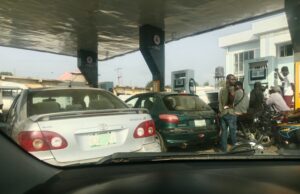
Private motorists, commercial drivers, tricycle (keke napep) operators, motorcycle (okada) riders and other petrol users in Lokoja, Kogi State, have responded to the downward trend in pump prices by thronging filling stations where the product is now selling at relatively affordable rates.
Our correspondent, who visited some filling stations in Lokoja on Sunday, reports that many private motorists and other consumers converged on MRS outlets to purchase petrol at ₦739 per litre, a price described as the lowest pump price recorded in the area as of Sunday, December 4, 2025.
Some of the motorists who spoke with our correspondent in separate interviews on Sunday at the MRS filling station, opposite Phase 1 Housing Estate in Lokoja, said they opted for the outlet because it offered the cheapest price compared to other filling stations in the town.
“You don’t expect me to buy petrol selling at ₦830 or ₦840 per litre or more when the same product is available at ₦739 per litre at another filling station,” a car owner, Mr William Adebayo, told The Reporters, reflecting the growing price sensitivity among motorists.
Findings by our correspondent indicate that the widening price disparity among filling stations in Lokoja is already reshaping consumer behaviour, with outlets maintaining higher pump prices recording noticeably lower patronage, while those offering cheaper rates experience increased traffic.
Commenting on the development, an economic analyst, Mr David Abimbola, welcomed the recent decision by the management of the Dangote Refinery to reduce the ex-depot price of petrol and its directive to MRS Oil Company to implement the adjustment at ₦739 per litre.
He urged other major oil marketers to follow suit.
According to him, a broader consumer alignment towards affordable pump prices would compel filling stations selling at higher prices to rethink their strategy and adjust prices downward in order to attract customers and remain competitive.
“When this happens in the long run, it will generate positive multiplier effects across the economy, ease the financial burden on motorists, and help moderate transportation and living costs nationwide,” he said.