


Join our Telegram group and receive breaking and trending news updates directly on your phone.
Join for News Updates ✕


By Dada Ahmed in Lokoja.
(C) Facebook.
With foreign reports.
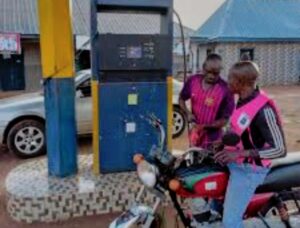
Many filling stations in Lokoja , Kogi State and its environs are now battling for customers as soaring petrol prices and worsening economic hardship force residents to cut down fuel purchases.
Our correspondent, who visited some filling stations along Ganaja-Junction-Gadumo-Ganaja village in Lokoja on Saturday, observed petrol attendants standing idly and waiting helplessly for customers as fuel patronage continued to decline.
One of the attendants, who spoke with our correspondent on condition of anonymity, lamented the sharp drop in fuel sales, blaming it on the persistent hike in petrol prices across the country.
“Many private car owners can no longer cope with the skyrocketing cost of petrol and have been forced to park their vehicles in favour of commercial transportation. This development has dealt a serious blow to our business because a large number of our regular customers no longer buy fuel from filling stations.
“Our only saving grace now are commercial drivers, tricycle operators and motorcycle riders who still patronise filling stations on a daily basis,” she said.
Findings by The Reporters on Saturday in Lokoja revealed a sharp surge in petrol prices, with pump price tags at the filling stations visited ranging from N1,345 to N1,370 per litre, compared to between N870 and N920 per litre barely two months ago.
The latest surge in petrol prices in Nigeria has been largely driven by the escalating crisis between the United States and Iran in the Middle East, alongside other global economic and supply-related factors.
Tension in the Middle East has escalated sharply as the crisis between the United States and Iran deepens in the strategically vital Strait of Hormuz, raising fears of a wider regional conflict and severe global economic consequences on many nations in the world, including Nigeria.
The Reporters gathered that despite reports of a ceasefire declaration, military confrontations have continued in the busy oil transit corridor, with both sides exchanging threats and forceful actions.
The situation has effectively disrupted movement through the Strait of Hormuz, one of the world’s most important oil shipping routes, causing fresh anxiety in global energy markets and international trade circles.
Diplomatic efforts to ease the standoff are said to be ongoing, but analysts warn that continued hostilities in the Gulf could trigger a major international crisis with far-reaching implications for oil prices, security and global stability.
Mal. Mahmud Lawal, Mrs. Angela Umeh, and other members of the public who spoke with our correspondent on the issue stressed the need for the Federal Government to ensure that the nation’s refineries operate at full capacity.
They also called on more wealthy Nigerians to emulate Alhaji Aliko Dangote by investing in the oil production sector so as to boost local output and generate sufficient petrol for export.
Lawal and others expressed optimism that with such measures in place, Nigeria would be able to end petrol importation and become better insulated from global oil shocks such as the ongoing US–Iran crisis in the Middle East.