





By Dada Ahmed, in Lokoja.
(C) Facebook.
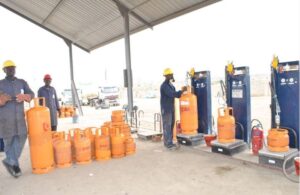
Residents of Lokoja, the Kogi State capital, are experiencing significant relief as the price of Liquefied Petroleum Gas (LPG) continues its downward trend, easing household energy costs and offering a breather from months of financial strain.
A market survey conducted by The Reporters on Saturday shows that the retail price of cooking gas has fallen by about ₦400 per kilogram. Just about one and a half months ago, LPG sold for approximately ₦1,500 per kg across major outlets in the state capital; the price has now dropped to around ₦1,100 per kg,reflecting a decline of 20.67 percent.
The development has been warmly welcomed by consumers, many of whom say the lower price is reducing pressure on their household budgets amid rising living costs.
Residents interviewed by our correspondent at gas stations in Ganaja, Phase 1, and the Felele axis described the trend as “encouraging,” noting that the reduction allows them to redirect funds to other essential needs such as food, transportation, and school expenses.
Many consumers expressed hope that the price decline would be sustained, especially as cooking gas remains the primary energy source for most urban households.
They urged regulatory agencies, marketers, and government authorities to ensure steady supply and prevent the sudden price fluctuations that have become common in recent years.
Energy experts say the situation in Lokoja mirrors a broader national trend, with LPG prices easing in various parts of the country due to improved supply conditions and stabilizing market fundamentals.
Economic analyst,Mr. Michael Audu,attributed the downward trend in LPG prices nationwide to increased domestic supply and more competitive pricing by producers.
He noted that recent supply improvements, including the Dangote Refinery’s reduction of its ex-depot LPG price from ₦810/kg to ₦760/kg, have helped drive retail prices lower.
According to him, reduced pressure from imports,coupled with softer global LPG prices,has also lowered the cost burden on local suppliers.
He added that a more efficient supply-distribution balance in recent weeks, as confirmed by the Nigerian Association of Liquefied Petroleum Gas Marketers (NALPGAM), has eased earlier shortages that contributed to price spikes.
Audu further explained that the relative stabilization and modest appreciation of the naira, alongside normalized transportation and logistics costs, have made it less expensive to import or distribute LPG, thereby supporting the current price reduction.
However, some energy analysts caution that the decline may be a temporary market correction rather than a permanent shift. They describe the current trend as “a reflection of market correction rather than a fundamental change in the sector.”
