




Join our Telegram group and receive breaking and trending news updates directly on your phone.
Join for News Updates ✕


By Dada Ahmed.
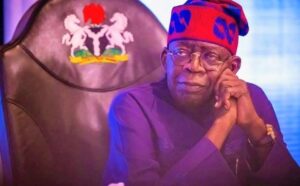
President Bola Ahmed Tinubu’s declaration of a nationwide security emergency marks one of the most decisive steps taken by his administration in confronting Nigeria’s complex and deep-rooted security challenges. Against the backdrop of rising attacks, banditry, kidnappings, and farmers–herders conflicts, the President’s directive introduces a significant expansion of security manpower and a restructuring of the nation’s response strategy.
In a statement from the State House, President Tinubu authorised massive additional recruitment into both the Army and the Nigeria Police Force. The police, in particular, are expected to take in 20,000 more officers, raising recent recruitment figures to an unprecedented 50,000 trainees nationwide. This scale of mobilisation, if implemented diligently, could signal a major shift in Nigeria’s ability to respond swiftly and effectively to violence across states.
The President went further, approving the use of National Youth Service Corps (NYSC) camps as makeshift training depots to fast-track the process. This step aims to decentralise training, reduce congestion in police colleges, and speed up deployment timelines. Meanwhile, officers withdrawn from VIP escort duties will be retrained and redeployed to security hotspots ,a strategy intended to redirect essential manpower to areas where citizens need them most.
In a country where criminal groups often exploit forested terrain, the President empowered the Department of State Services (DSS) to immediately deploy trained forest guards. This renewed emphasis on securing forests, long known to be hideouts for bandits, insurgents, and kidnappers,acknowledges a gap long criticised by security experts. The DSS has also been authorised to recruit more personnel dedicated to forest surveillance, making it harder for violent groups to operate or regroup.
Tinubu’s declaration carries a repeated message: insecurity is a national emergency requiring the participation of every Nigerian. This collective responsibility underscores the reality that government alone cannot police over 200 million people across a vast territory. Communities, religious leaders, traditional institutions, and civil organisations are being called into the security framework.
The commendation of security agencies for the recent rescue of 24 schoolgirls in Kebbi and 38 worshippers in Kwara State shows progress in coordinated operations. Yet, the President acknowledged the work ahead, noting ongoing efforts to rescue abducted students in Niger State and other Nigerians still held captive. His tribute to fallen soldiers, including Brigadier-General Musa Uba, highlights the human cost borne by security personnel in defending the nation.
Importantly, the President issued strong directives to the military urging then to remain resolute, uphold discipline, avoid collusion, and restore peace in all theatres of operation. This reaffirms concerns about alleged internal sabotage, fatigue among other factors within the armed forces , issues that have historically undermined counterterrorism efforts.
Tinubu also extended support to states with established security outfits, recognising the evolving role of sub-national actors in community policing. His call on the National Assembly to review laws for the possible creation of state police is a significant sign that the long-debated decentralised policing model may finally gain traction.
Beyond boots on the ground, the President addressed one of the country’s recurring triggers of violence, the herders–farmers conflict. By urging herders’ associations to embrace ranching, surrender illegal weapons, and engage with the newly created Ministry of Livestock Development, Tinubu signalled a policy shift away from open grazing, which has fuelled years of clashes and loss of lives.
The President advised states to stop building boarding schools in remote locations without adequate security and encouraged mosques and churches in vulnerable communities to seek active protection from security agencies. These cautionary measures reveal an awareness that soft targets, schools, worship centres, marketplaces, remain attractive to criminal elements seeking to instill fear.
Discerning minds believe that while Tinubu’s security directives are robust, addressing the underlying economic factors that fuel insecurity is equally crucial.
It must be stressed that widespread poverty, youth unemployment, inflation, and food shortages have driven many into crime or made communities vulnerable to recruitment by violent groups. Therefore, a sustainable security strategy must be as a matter of necessity,anchored on economic stability.
Most Nigerians yern for a situation where the three tiers of government, particularly the federal government,could ease economic hardship by stabilising the price of essential goods through enhanced targeted subsidies and strategic grain reserves. In the same vein, expanding public works programmes, MSME grants, and rural infrastructure projects would provide jobs for the millions of restless youths who often find themselves between desperation and criminal recruitment.
Additionally, accelerating reforms in agriculture,such as mechanised farming clusters, input subsidies, and guaranteed markets, could boost food production and reduce inflationary pressures. This would not only strengthen household finances but also weaken the economic drivers of banditry, cattle rustling, and communal clashes.
Improving electricity supply, reducing transport costs, and supporting local manufacturing would further stimulate economic activity.The argument here is that as households feel less pressure, the social environment becomes less favourable for crime and insurgency. Security and economy are deeply intertwined, and progress in one inevitably strengthens the other.
Ultimately, President Tinubu’s declaration signals a readiness to confront insecurity head-on. But its success will depend on strict implementation, transparency in recruitment, community cooperation, and parallel economic reforms. No doubt Nigerians yearn for peace,not just enforced by force of arms, but built on a foundation of prosperity, inclusiveness, and justice.
As the nation navigates this critical moment, the President’s words serve as both reassurance and a rallying cry emphasizing the need for Nigerians to stand together. Only through collective vigilance, a strengthened security architecture, and a revitalised economy can the country finally overcome the spectre of violence that has haunted it for too long.
Dada Ahmed is a retired Assistant Editor-In-Chief,News Agency of Nigeria ,NAN and publishes The Reporters.
Strategic Media Partnership for Growth and Reputation: Introducing The Reporters
The Reporters is a dynamic online news publication committed to delivering credible, timely, and impactful journalism across Nigeria and beyond. With a strong foundation in professional reporting and editorial integrity, the platform focuses on social, economic, political, and human development issues that shape public discourse. Backed by decades of journalistic experience, The Reporters offers a trusted voice that informs, educates, entertains, and influences a diverse and engaged audience.
For members of the business community, The Reporters provides a strategic platform to enhance visibility, build brand credibility, and connect with target markets. Through well-crafted news, features, interviews, sponsored content, and digital amplification, businesses can showcase their products, services, and innovations to a wider audience. This engagement not only drives patronage but also positions organisations as key contributors to economic growth and development.
Political actors and aspirants also stand to benefit significantly from partnering with The Reporters. As the 2027 elections approach, the platform offers an opportunity for politicians to effectively communicate their vision, programmes, and track records to the electorate. Through balanced profiling, issue-based coverage, and reputation management content, The Reporters helps shape public perception and strengthens candidates’ connection with voters.
Beyond visibility, The Reporters plays a crucial role in image laundering and perception management, presenting clients in a favourable, credible, and issue-driven light while maintaining ethical standards. By highlighting achievements, clarifying controversies, and projecting leadership qualities, the platform supports politicians in building trust and acceptance among constituents, which are critical assets in any electoral contest.
Engaging with The Reporters is therefore not just about publicity, it is about strategic communication for mutual benefit. Partners gain access to a credible media channel with the wide reach of The Reporters while it continues to fulfill its mandate of promoting development-oriented narratives. We invite stakeholders in both business and political spheres to collaborate with us in shaping informed opinions, driving growth, and advancing democratic engagement.
Prospective clients can reach us via WhatsApp: 08032901058 or email: ahmeddada008@gmail.com.
- Management