


Join our Telegram group and receive breaking and trending news updates directly on your phone.
Join for News Updates ✕


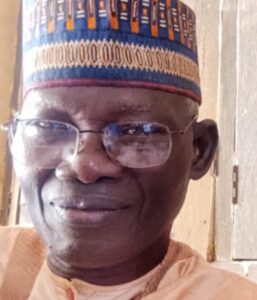
By Abdulkarim Abdulmalik.
On a hot afternoon at the ever busy Area 10 in Garki District of Abuja, Musa Adabara, a commercial auto driver, leans against his taxi and shakes his head in quiet frustration. Just weeks ago, he could refill his vehicle tank and still smiles home with money in his pocket for his family upkeep.
Today, he counts every naira before heading to the fuel station.
“What is happening in Iran,” he says, “is happening to my pocket here.”
Musa may never visit Tehran, Washington, or Tel Aviv; but the ongoing confrontation involving United States and Israel against Iran is already reshaping his daily reality.
What appears to be a distant geopolitical conflict has quietly found its way into Nigeria’s streets, markets, and homes.
*A Distant War That Feels Close*
The conflict, which recently escalated, is rooted in long-standing tensions over Iran’s regional influence and nuclear ambitions. Military exchanges and strategic posturing have intensified, with global powers taking sides and financial markets reacting sharply.
Reuters, in a recent report, “Gulf War Rattles Global Oil Markets,” corroborated in another report by The Guardian titled, “US Escalates Military Posture in Iran Conflict,” indicate that the crisis has unsettled global trade and heightened fears of prolonged instability.
For many Nigerians, however, the details of geopolitics matter less than the consequences. The question is simple: Why does a war thousands of kilometres away make life harder here?
The answer lies in oil.
*Oil: Nigeria’s Blessing, Burden*
Nigeria’s economy revolves heavily around crude oil exports. When global oil prices rise—as they often do during conflicts—countries like Nigeria are expected to benefit. In theory, higher prices mean more government revenue and stronger foreign exchange inflows.
However, reality tells a different story. Nigeria exports crude oil but imports most of its refined petroleum. This structural contradiction means that when global oil prices increase, Nigerians end up paying more for fuel.
Karl T (1997) in his work, “The Paradox of Plenty: Oil Booms and Petro-States,” wrote that economists described this scenario as the “resource paradox”—a situation where a resource-rich country fails to fully benefit from its own wealth. The current conflict has once again exposed this vulnerability.
As tensions around the Strait of Hormuz threaten global oil supply, Reuters reported that prices have surged, creating ripple effects across economies worldwide.
In Nigeria, the impact is spontaneous: rising fuel prices, increased transport costs, and higher food prices.
*From Fuel Pumps to Food Prices*
At Wuse Market in Abuja, Aisha Audu, a food vendor, arranges her tomatoes with a worried look. “Everything has gone up,” she explains. “Transport is more expensive, so food is more expensive.”
Her story reflects a broader economic chain reaction. When fuel prices rise, transportation costs increase. When transportation costs increase, food prices follow. The result is inflation that affects everyone, especially low-income households.
According to recent economic analyses of the 2023 International Monetary Fund report – World Economic Outlook: Inflation Dynamics in Emerging Markets – global energy shocks often lead to inflation spikes in developing countries due to their reliance on imports and weak domestic production systems. Nigeria fits this pattern closely.
The war has also triggered uncertainty in global markets, leading investors to move their funds to safer economies. This “capital flight” puts pressure on the naira, making imports even more expensive. Ciltra Research in a recent report, “US–Iran Conflict: Implications for Nigeria’s Economy and the Naira,” painted similar gloomy picture.
For ordinary Nigerians, this translates into a painful cycle: higher prices, weaker currency, and shrinking purchasing power.
*Politics of Economic Pain*
Economic hardship rarely stays confined to the economy—it spills into politics.
As Nigerians grapple with rising costs, public frustration grows. Historically, economic downturns have influenced political outcomes in Nigeria, shaping voter behaviour and public trust in leadership as observed by Lewis, P (2007) in his work, “Growing Apart: Oil, Politics, and Economic Change in Indonesia and Nigeria.”
As the 2027 elections beacon, analysts suggest that the economic consequences of the Middle East conflict could become a defining issue. Fuel prices, subsidy policies, and economic management will likely dominate national conversations.
The government faces a delicate balancing act. That is, managing domestic expectations while responding to global realities beyond its control. Managing the two variables simultaneously is an uphill task.
*Structural Weaknesses Laid Bare*
Beyond immediate hardship, the conflict highlights deeper structural problems in Nigeria’s economy.
One of the most critical is the lack of sufficient domestic refining capacity. Despite decades of oil production, Nigeria still depends heavily on imported refined products. This dependence makes the country vulnerable to global price fluctuations.
Another issue is over-reliance on oil revenue. Given that oil accounts for a significant portion of government income, other sectors—such as agriculture and manufacturing—remain grossly underdeveloped.
Scholars have copiously written on the imperatives of economic diversification. For instance, Sachs Jeffrey and Andrew Warner (2001) in their work, “The Curse of Natural Resources,” published in European Economic Review argued that economic diversification is essential for stability in resource-dependent economies. Yet progress in Nigeria has been slow and utterly irresponsible.
The current crisis therefore serves as a stark reminder that without structural reforms, Nigeria will continue to feel the full force of global shocks.
*Global Shifts, Local Consequences*
The US–Israel imposed war on Iran is not just a regional issue; it is reshaping global economic and political dynamics.
Reuters’ reports indicate that Gulf countries are reassessing their economic strategies and exploring new partnerships beyond traditional Western alliances. These shifts could alter global oil markets and trade patterns in the long term.
For Nigeria, this presents both risks and opportunities. In the face of emergence of new partnerships, increased competition and uncertainty could also challenge Nigeria’s position in the global economy.
*The Human Story Behind the Headlines*
Amid all the statistics and analysis, it is important to remember the human dimension of the crisis.
It is Musa, the taxi driver, calculating whether he could afford another litre of petrol.
It is Aisha, the market woman, adjusting her prices and hoping customers would still come.
It is the young graduate, forwarding job applications to various potential employers in an economy where businesses are cutting costs.
These are the real stories of the war—stories that rarely make international headlines.
*Moment for Reflection and Action*
The ongoing conflict offers Nigeria a moment of reflection. Although the country has no control over the unfolding global events, it is obvious that the country could control its response to the many ripples effect.
This is by way of Investing in domestic refining, strengthening local industries, and diversifying the economy. These are no longer optional; they are urgent necessities.
Also very important, is effective governance through transparent policies, clear communication, and proactive economic management that would help cushion the impact of global shocks.
*Conclusion*
The US–Israel war on Iran may be unfolding thousands of kilometres away, but its effects are deeply felt in Nigeria. It has exposed vulnerabilities, intensified economic hardship, and raised important questions about the country’s future.
For Nigerians like Musa and Aisha, the war is not about geopolitics—it is about survival.
And for Nigeria as a nation, it is a reminder that in an interconnected world, distant conflicts are never truly distant.
– Abdulmalik is a Journalist and can be reached on: nowmalik@gmail.com
Strategic Media Partnership for Growth and Reputation: Introducing The Reporters
The Reporters is a dynamic online news publication committed to delivering credible, timely, and impactful journalism across Nigeria and beyond. With a strong foundation in professional reporting and editorial integrity, the platform focuses on social, economic, political, and human development issues that shape public discourse. Backed by decades of journalistic experience, The Reporters offers a trusted voice that informs, educates, entertains, and influences a diverse and engaged audience.
For members of the business community, The Reporters provides a strategic platform to enhance visibility, build brand credibility, and connect with target markets. Through well-crafted news, features, interviews, sponsored content, and digital amplification, businesses can showcase their products, services, and innovations to a wider audience. This engagement not only drives patronage but also positions organisations as key contributors to economic growth and development.
Political actors and aspirants also stand to benefit significantly from partnering with The Reporters. As the 2027 elections approach, the platform offers an opportunity for politicians to effectively communicate their vision, programmes, and track records to the electorate. Through balanced profiling, issue-based coverage, and reputation management content, The Reporters helps shape public perception and strengthens candidates’ connection with voters.
Beyond visibility, The Reporters plays a crucial role in image laundering and perception management, presenting clients in a favourable, credible, and issue-driven light while maintaining ethical standards. By highlighting achievements, clarifying controversies, and projecting leadership qualities, the platform supports politicians in building trust and acceptance among constituents, which are critical assets in any electoral contest.
Engaging with The Reporters is therefore not just about publicity, it is about strategic communication for mutual benefit. Partners gain access to a credible media channel with the wide reach of The Reporters while it continues to fulfill its mandate of promoting development-oriented narratives. We invite stakeholders in both business and political spheres to collaborate with us in shaping informed opinions, driving growth, and advancing democratic engagement.
Prospective clients can reach us via WhatsApp: 08032901058 or email: ahmeddada008@gmail.com.
- Management