





By Barth Ikiebe.
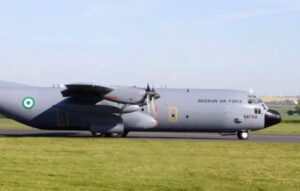
Nigerian Air Force has clarified its Jet’s precautionary landing amid Geopolitical Tensions in Burkina Faso.
A statement issued by NAF spokesperson, Air Commodore Ehimen Ejodame,stated that the aircraft, which was on a ferry mission to Portugal for scheduled maintenance, diverted to Bobo-Dioulasso, the nearest suitable airfield, in line with international aviation safety protocols.
He said the crew acted swiftly to ensure safety and received warm cooperation from Burkinabe authorities upon landing.
“The NAF crew is safe and has received cordial treatment from the host authorities,” Ejodame said.
He added that plans are underway to resume the mission as scheduled, stressing that the Nigerian Air Force remains committed to strict compliance with operational procedures and safety standards.
The Air Force assured the public that the precautionary measure was taken to protect its personnel while continuing to fulfill its constitutional mandate.
Contrary to the narrative pushed out by Burkina Faso’s state news agency on Monday, the NAF aircraft neither “violated” Burkinabe airspace nor entered the country without authorisation.
The jet, which departed Lagos en route to Portugal, developed a technical fault mid-flight and immediately sought permission to land in the nearest safe airport, in line with international aviation protocols.
Clearance was granted. The crew landed safely in Bobo-Dioulasso, where Burkinabe officials received them warmly, provided accommodation, and fully cooperated with engineers who worked overnight to fix the aircraft.
Sources said that “everything had been concluded” and the jet was preparing for takeoff when a sudden counter-order came from Burkina Faso’s military authorities, instructing local officers to halt the Nigerian aircraft’s departure.
It was at this point, insiders say, that the issue shifted from aviation to geopolitics.
Burkina Faso, now a member of the Confederation of Sahel States (AES) along with Mali and Niger, has had strained relations with the Nigerian-led ECOWAS bloc following its withdrawal from the regional body earlier this year. Diplomats familiar with the development said that Ouagadougou’s decision to detain the aircraft was not driven by aviation concerns but by deeper political frustrations within the Sahel alliance.
“The order to hold the aircraft came from higher political quarters, not from aviation or base Commanders,” one official revealed. “Burkina Faso is still aggrieved over ECOWAS actions and the perception that Nigeria continues to influence regional decisions affecting the AES.”
More specifically, Burkinabe officials reportedly remain displeased about the recent foiling of a coup attempt in Benin Republic. The AES had seen Benin as a likely new entrant into its confederation. The coup’s collapse — with external intelligence support from Nigeria and other partners — disrupted those ambitions and angered hardliners within the Sahel bloc.
Meanwhile, the Nigerian government has opened high-level diplomatic negotiations with Ouagadougou to secure the immediate release of the aircraft and its personnel. Senior officials from the Nigerian Ministry of Foreign Affairs, Defence Headquarters, and ECOWAS liaison desks are already involved in the talks.
Burkina Faso’s civilian aviation authorities and some senior military officers are themselves embarrassed by the political order that reversed their earlier clearance.
As negotiations continue, both governments are working to ensure the safe and prompt release of the aircraft and all personnel on board.
